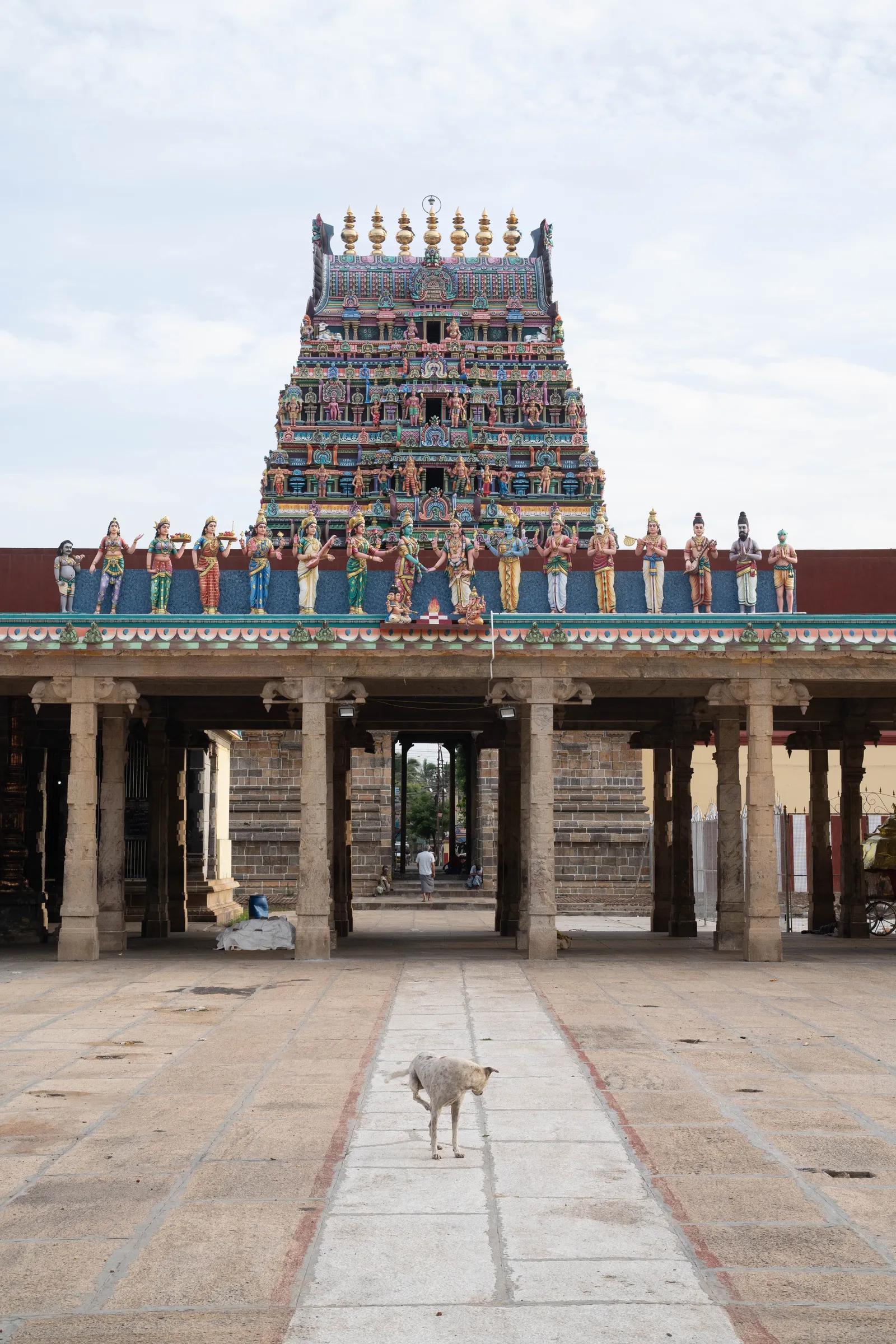
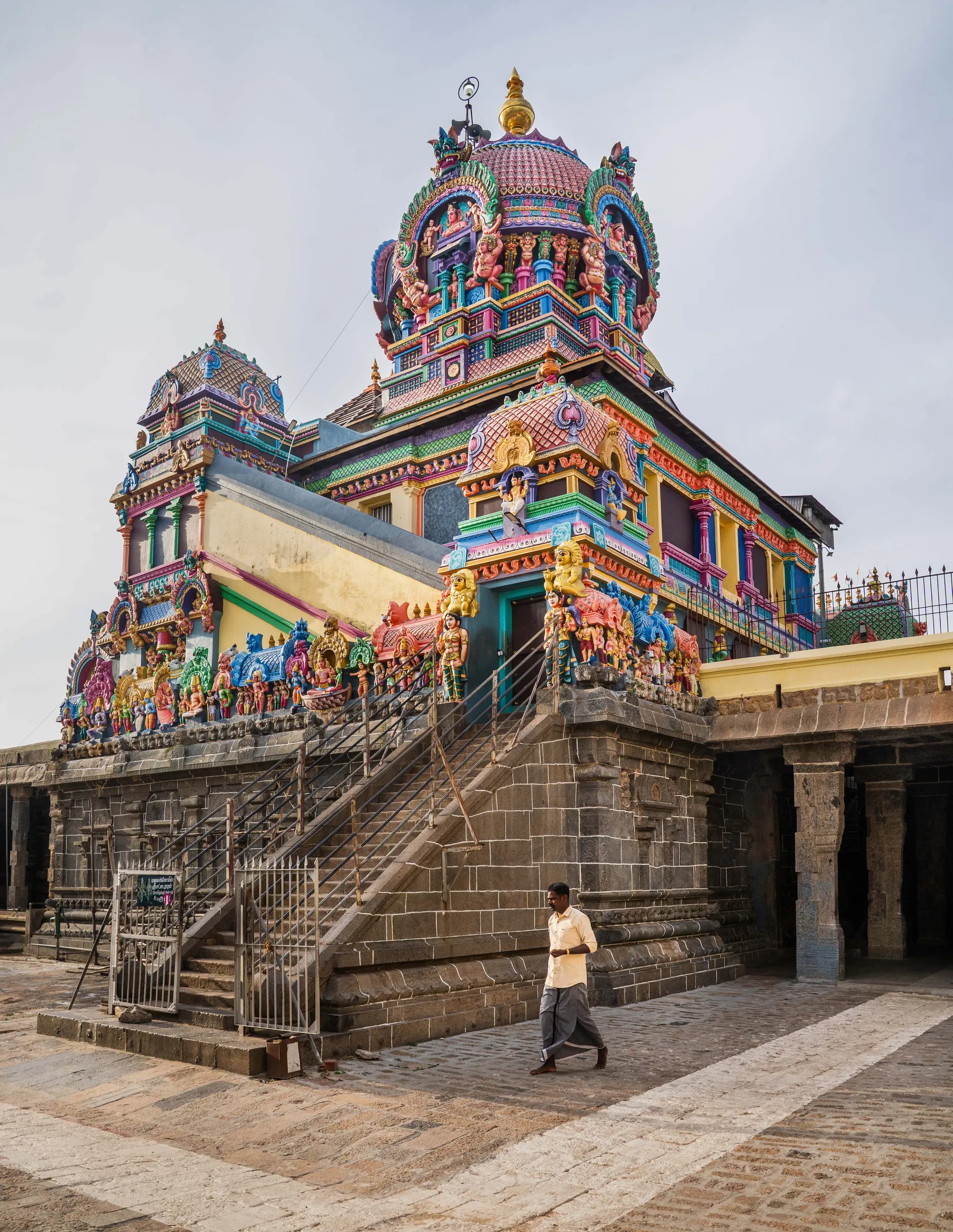
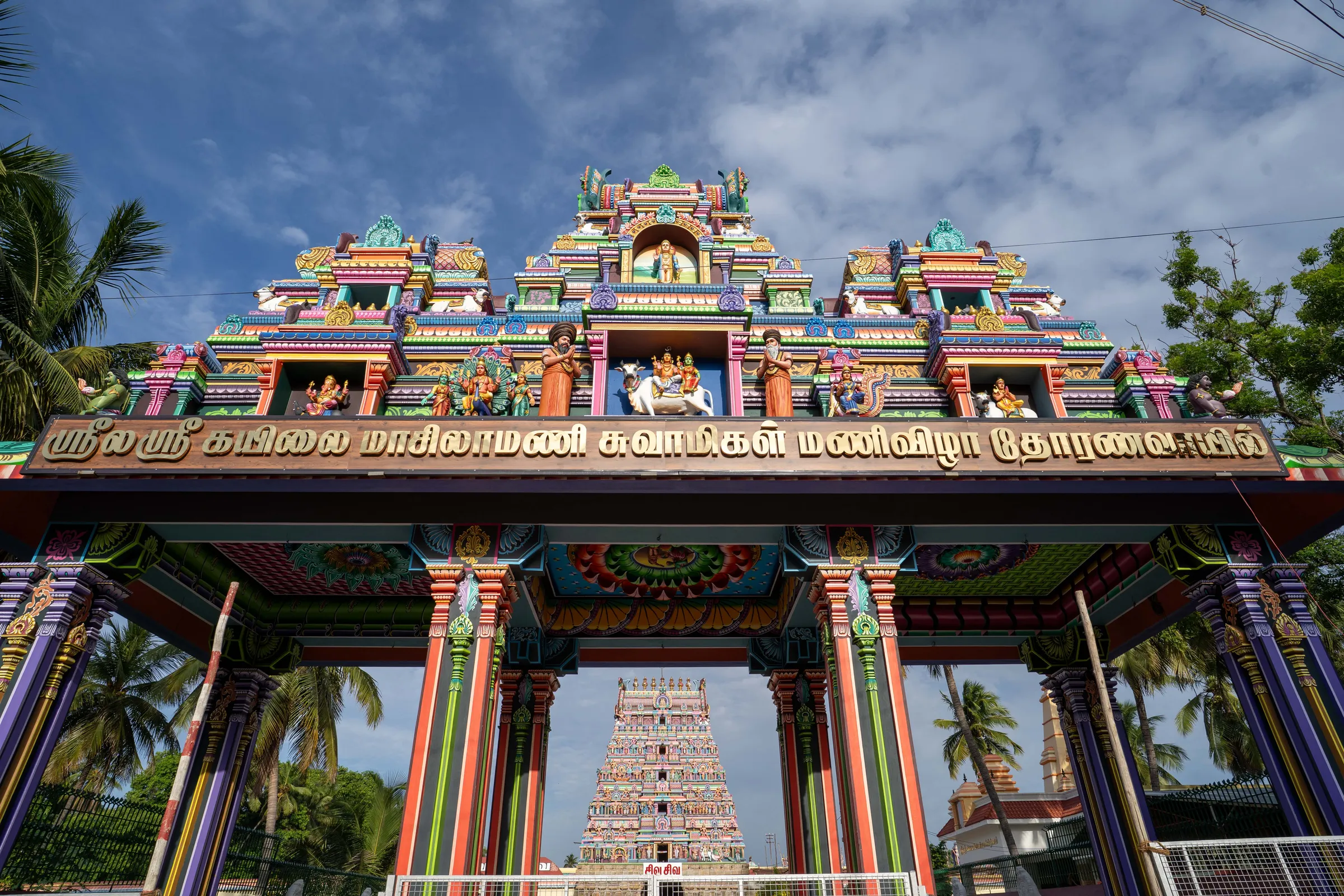
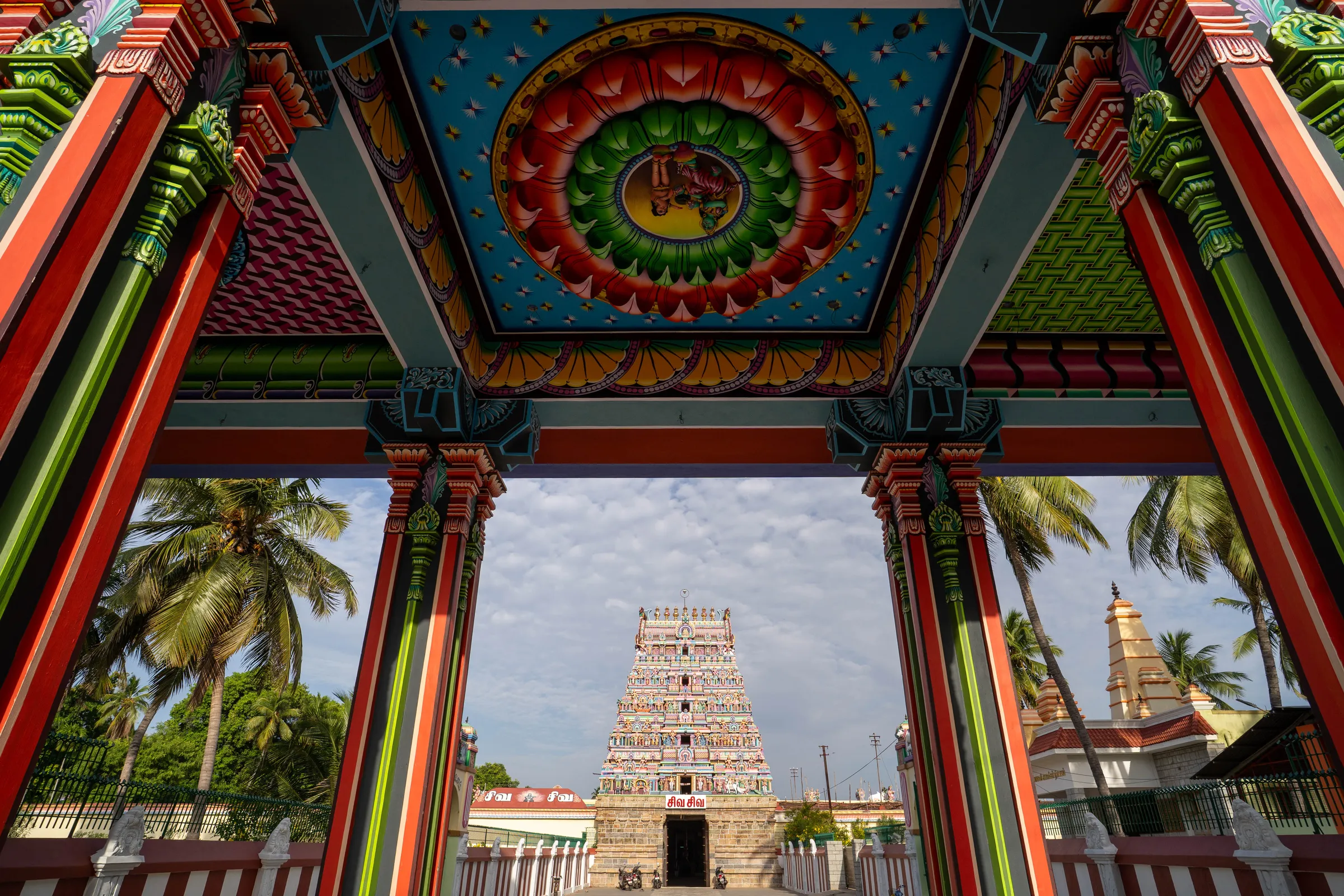
An early Chōḷa Śiva temple at Pullamangai, named for Brahmā who is said to have worshipped the lord here. The book pairs it with the story of the boy saint Sambandar and the rise of the bhakti tradition.
The temple is named Brahmapuri, where Brahmā, seated on a lotus, worshipped the lord as he created the worlds, as Sambandar sings of the one with the earrings, wearing the crescent and seated on the bull, who smears the ashes of the funeral pyres. Pullamangai is among the early Chōḷa temples (8th to 11th centuries) known for miniature Rāmāyaṇa sculpture panels.
The book sets the temple beside the story of Sambandar and the bhakti movement. In the 7th century, as Jainism and Buddhism were dominant in Tamil Nadu, the Nayanmārs and Āḻvārs travelled the land singing in Tamil that heartfelt devotion mattered above ritual. Of the saints who saw the divine in Śiva there were 63 Nayanmārs, the oldest Kāraikkāl Ammaiyār and the most important the boy saint Sambandar, who sang 6,000 songs of which 383 survive.
Sources
Pradeep Chakravarthy, 100 Timeless Tamil Nadu Temples
This is an open, reviewed record. If you have spotted an error or have
something to add — a correction, a date, a source, a name in another script —
propose it. Every change is reviewed before it joins the record.
You are suggesting an edit. Click any highlighted paragraph to change it.
“Suggest an edit” makes this entry editable right here — change the text, tell us how to reach you, and send it. No account needed. “Share feedback” opens a short form. Both go through review before anything is published.