Gangaikonda Cholapuram · Ariyalur · Chōḷa · largely complete by c. 1035 · inferred
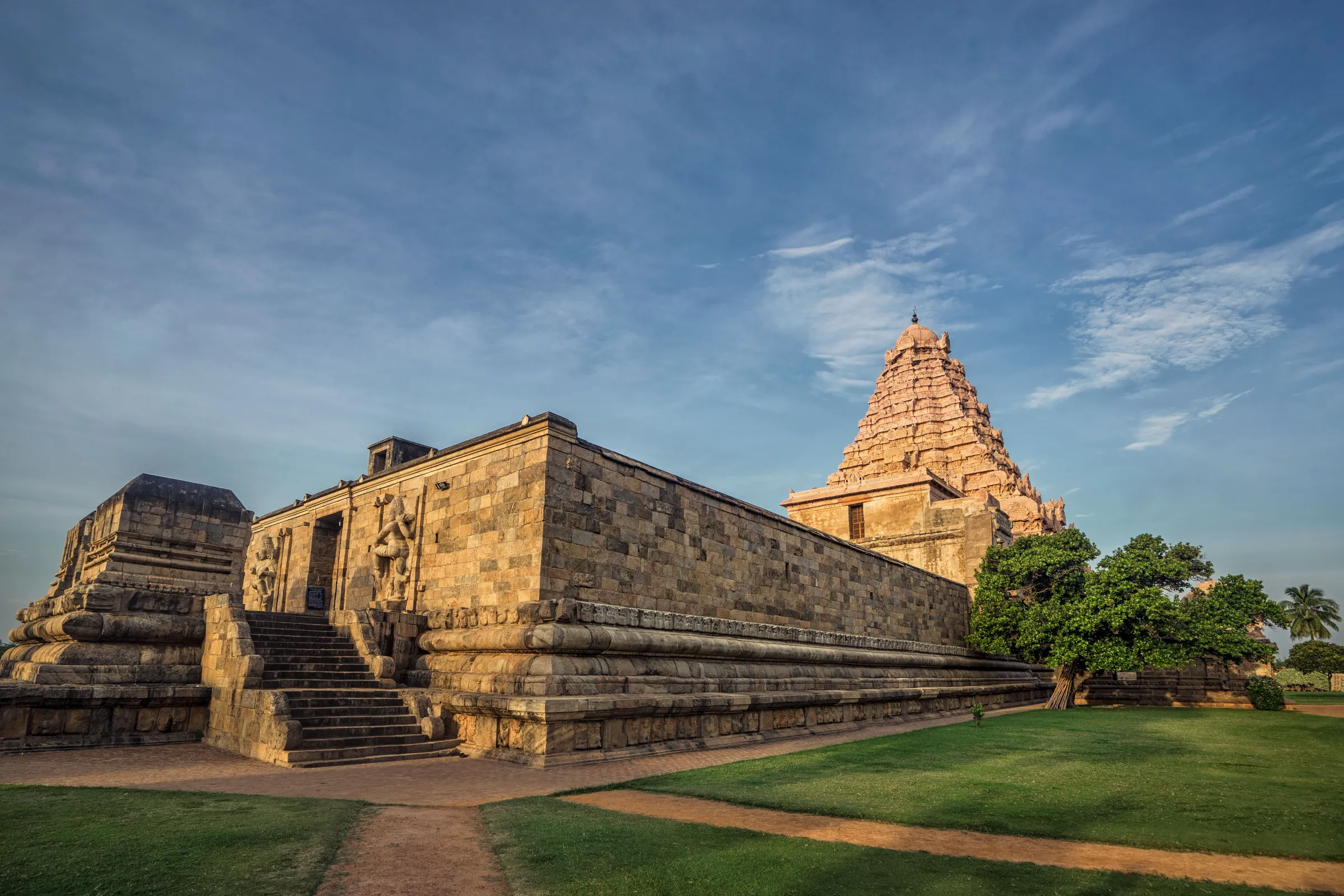
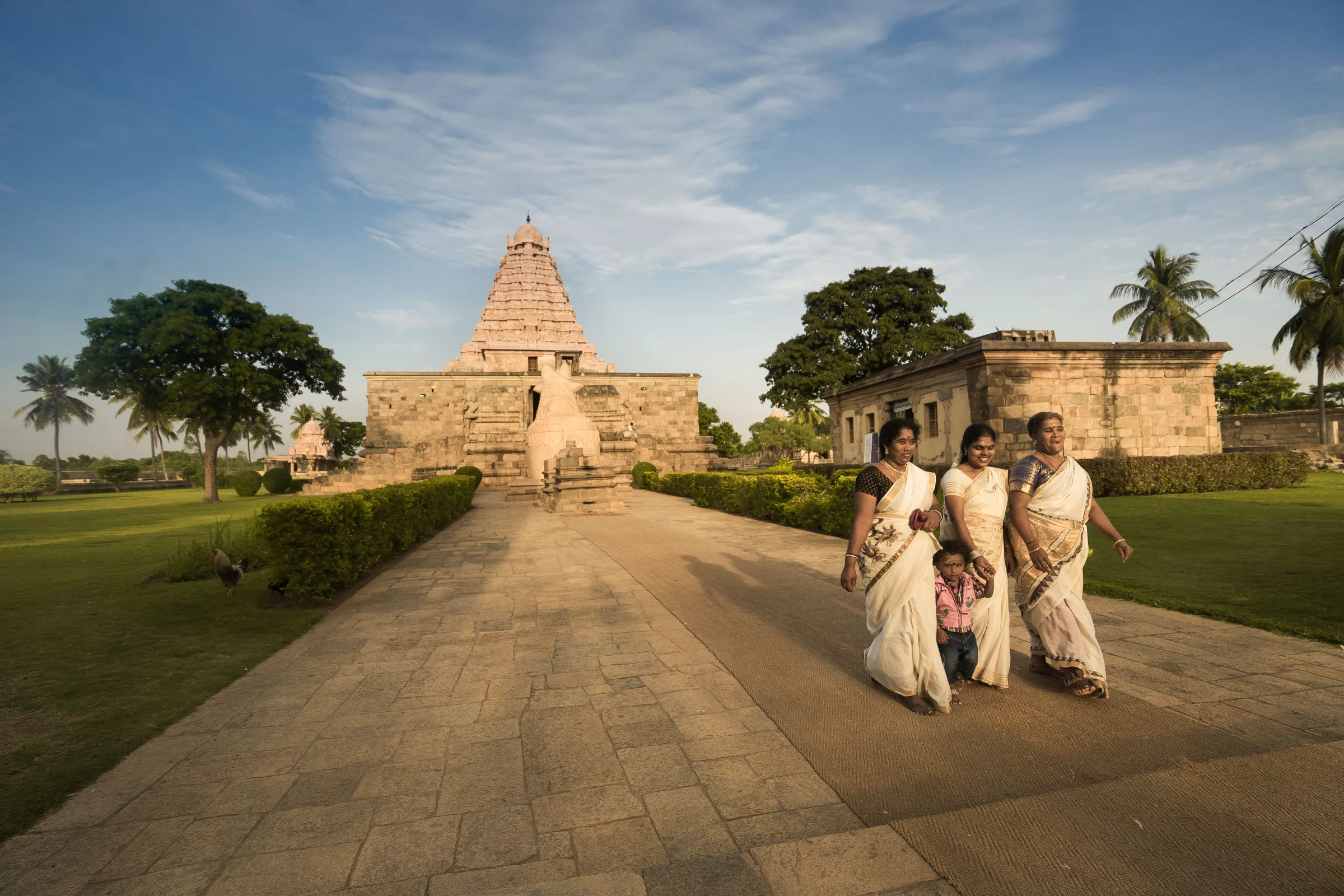
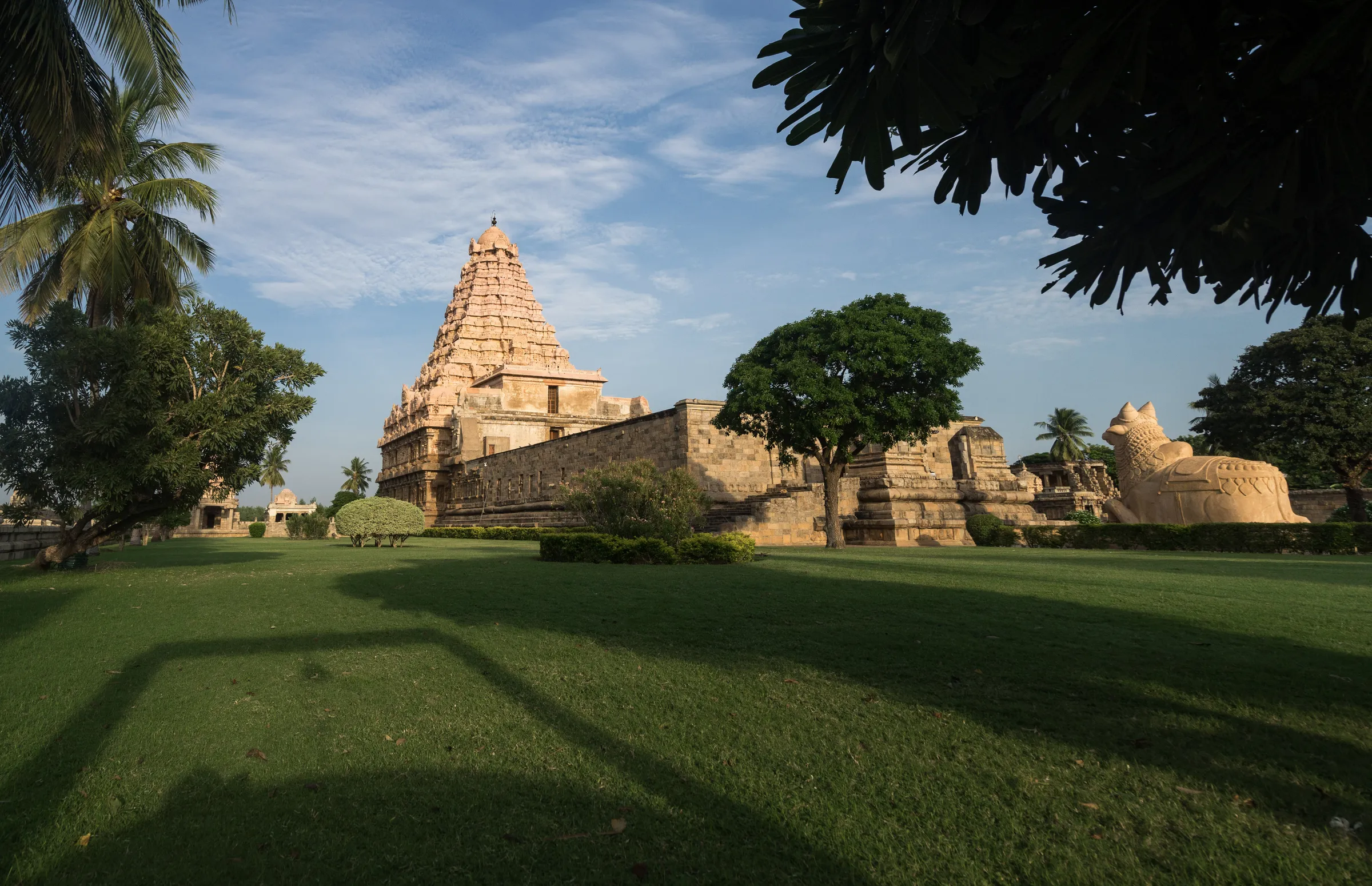
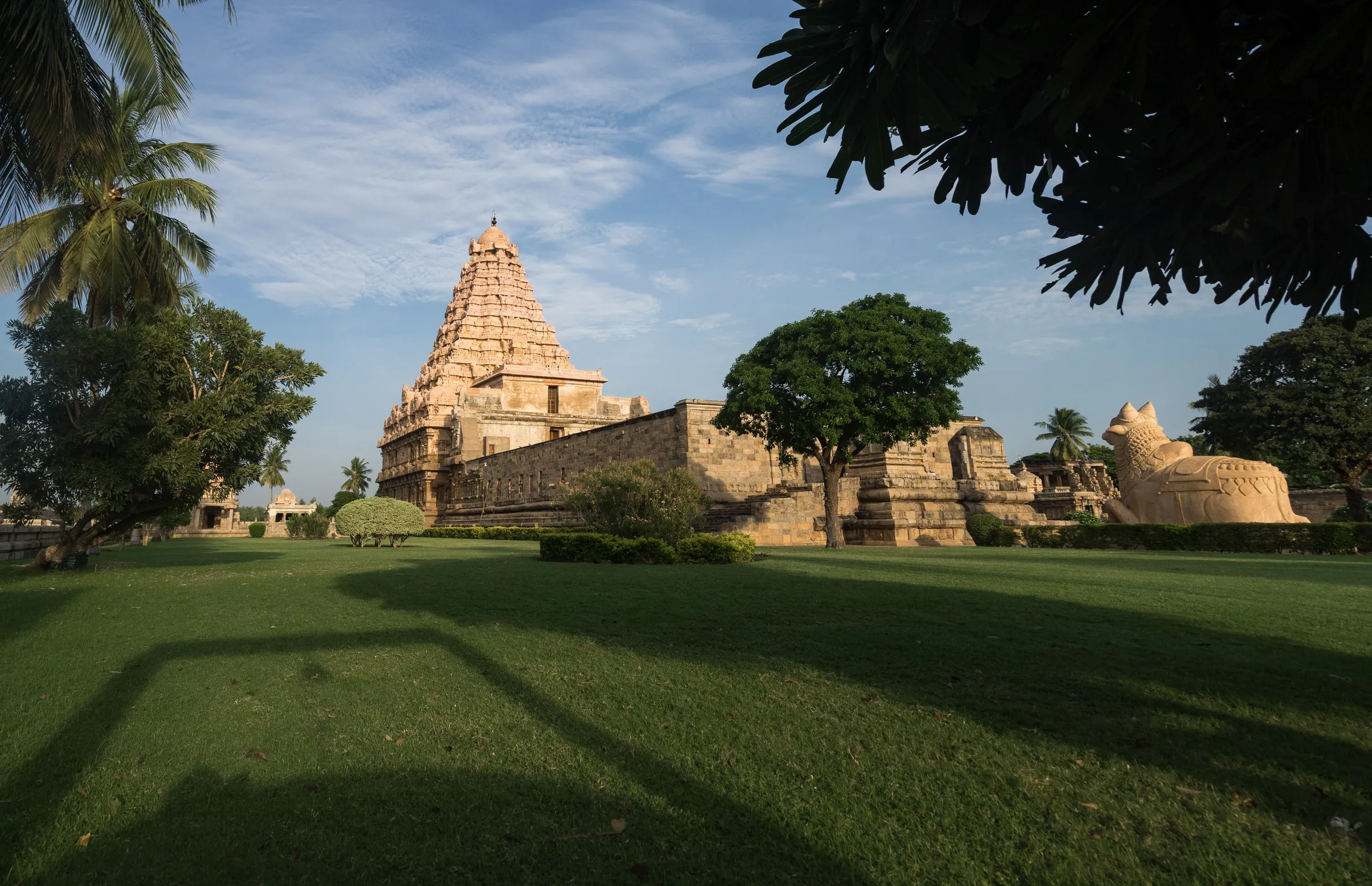
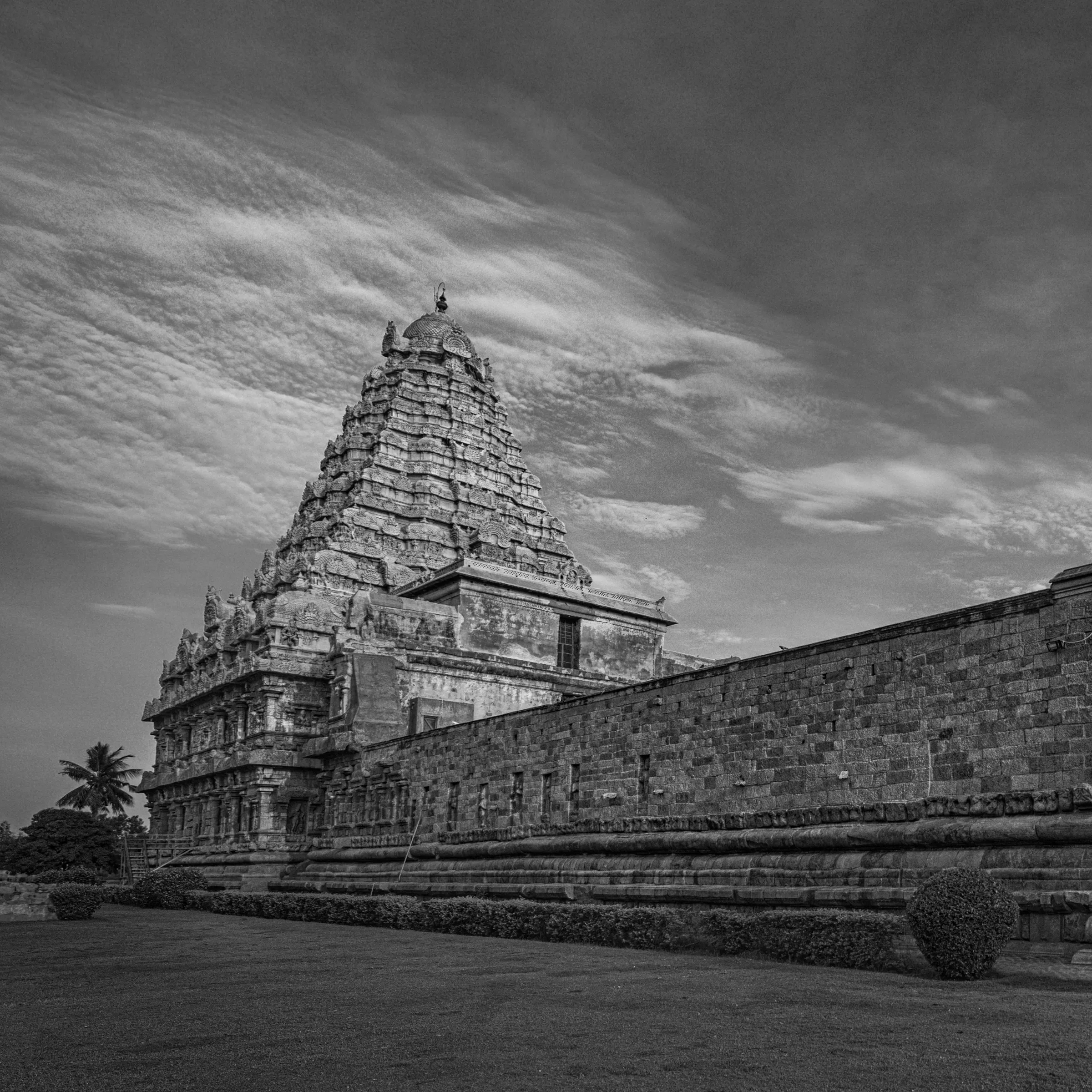
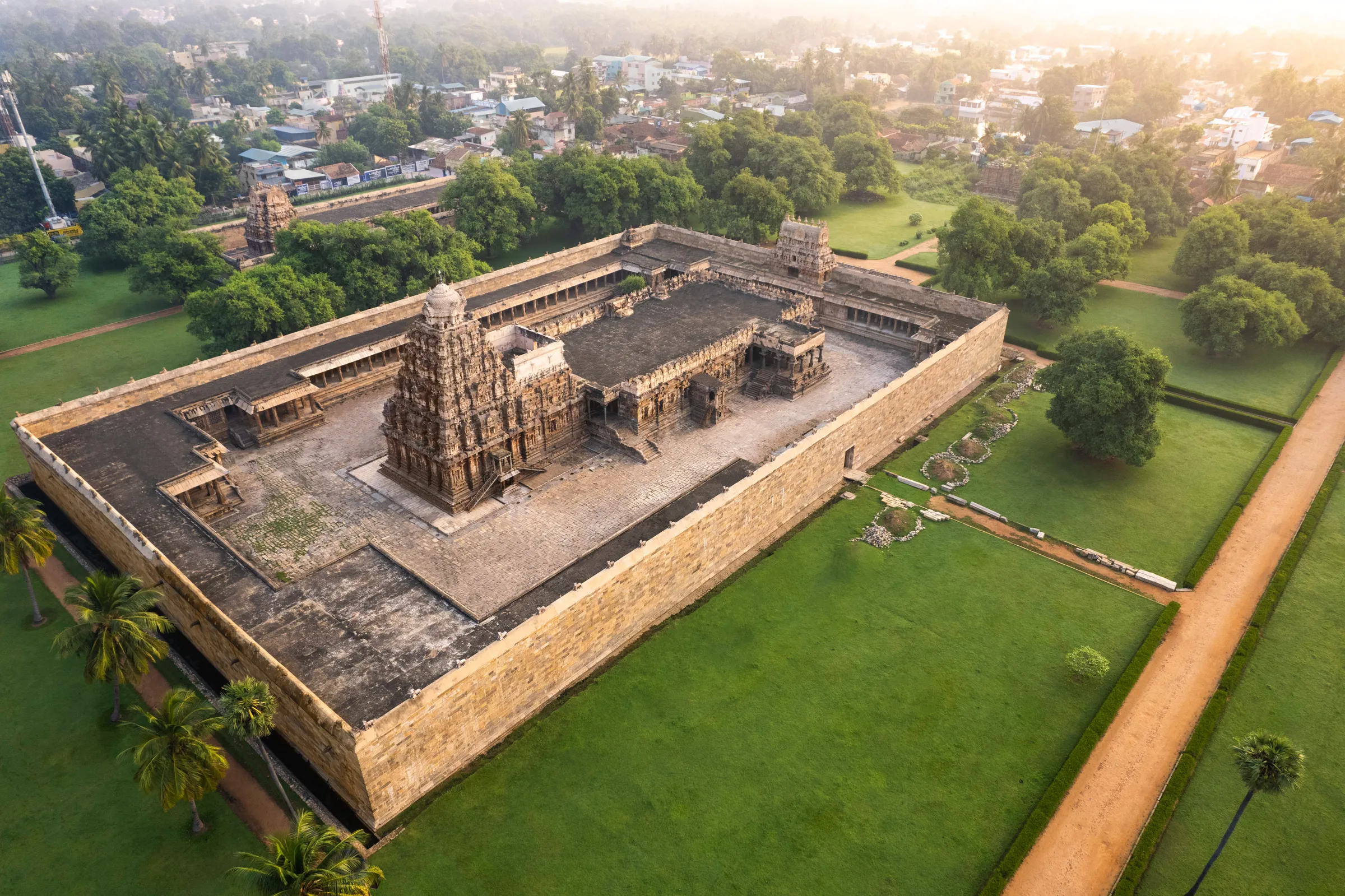
The temple of Rājēndra Chōḷa I at his new capital of Gangaikonda Cholapuram, raised to mark his conquests to the Ganges. Its śrīvimāna rises about 30 feet, and it is celebrated for stone and metal sculpture rather than inscriptions.
The śrīvimāna is about 30 feet high, and historians read the temple as a gentler counterpart to the Thanjavur Bṛhadīśvara, with a soft angle of rise and many sculptures set within kōṣṭas or alcoves. The talas of the vimāna repeat one pattern in descending sizes to create an overall harmony. The walls of the sanctum stand at two levels before the vimāna begins, and here are the temple's fine kōṣṭa devas, of which Śiva honouring Chaṇḍēśa, Naṭarāja and Sarasvatī are the finest and untouched by vandals.
To the rear of the garbhagṛha in the west are a Viṣṇu and a Liṅgōdbhava, and, rarely, the guardians of the eight directions, Agni, Yama, Nirṛti, Varuṇa, Vāyu, Sōma and Īśāna, with Indra not represented. The Dvārapālakas are noteworthy. Inside on the right, against a wall, is the Saura pīṭha, a single stone Navagraha that was war booty from the Cālukyas and possibly Tamil Nadu's first Navagraha shrine as known today. An adjacent Mahiṣāsuramardhinī is also a war trophy from Rājēndra's Cālukya campaigns.
02
Archaeological
dated & cited
The village is first heard of in 1029, by which time Rājēndra had conquered parts of Madhya Pradesh, Uttar Pradesh, Odisha and West Bengal. He had given permanent gifts in 1032 to his father's temple in Thanjavur, which he transferred to this new temple. The temple seems to have been largely complete by 1035, and Rājēndra lived there for another nine years.
A standing mystery is that no inscriptions of his own time are in the temple; everything is from almost two decades after his death, as is the reason for the site's decisive abandonment. Rājēndra also created a massive lake of about 130 square kilometres to mark his Ganges victory. The site was a planned city built from scratch; burnt bricks of his time survived into colonial days but were reused by later builders.
Dating
Consecratedlargely complete by c. 1035 · inferred
Begunfrom c. 1029 · inferred
No inscriptions of Rājēndra's own time survive in the temple; all records are from almost two decades after his death.
Protection & condition
GroupGreat Living Chōḷa Temples
ConditionIn worship
03
Mythological
as transmitted
Rāja Rāja Chōḷa had a worthy successor in Rājēndra Chōḷa (1012 to 1044), who ruled as co regent, occupied Sri Lanka, took the Pāṇḍya crown and claimed the necklace of Indra. Having in a Tamil view conquered the world, he made his deity the lord of the entire world, Bṛhan Eśvara, at a new capital, Gangaikonda Cholapuram. The finest Naṭarāja is said to dance to the tālam of Kāraikkāl Ammaiyār.
Sources
Pradeep Chakravarthy, 100 Timeless Tamil Nadu Temples
This is an open, reviewed record. If you have spotted an error or have
something to add — a correction, a date, a source, a name in another script —
propose it. Every change is reviewed before it joins the record.
You are suggesting an edit. Click any highlighted paragraph to change it.
“Suggest an edit” makes this entry editable right here — change the text, tell us how to reach you, and send it. No account needed. “Share feedback” opens a short form. Both go through review before anything is published.