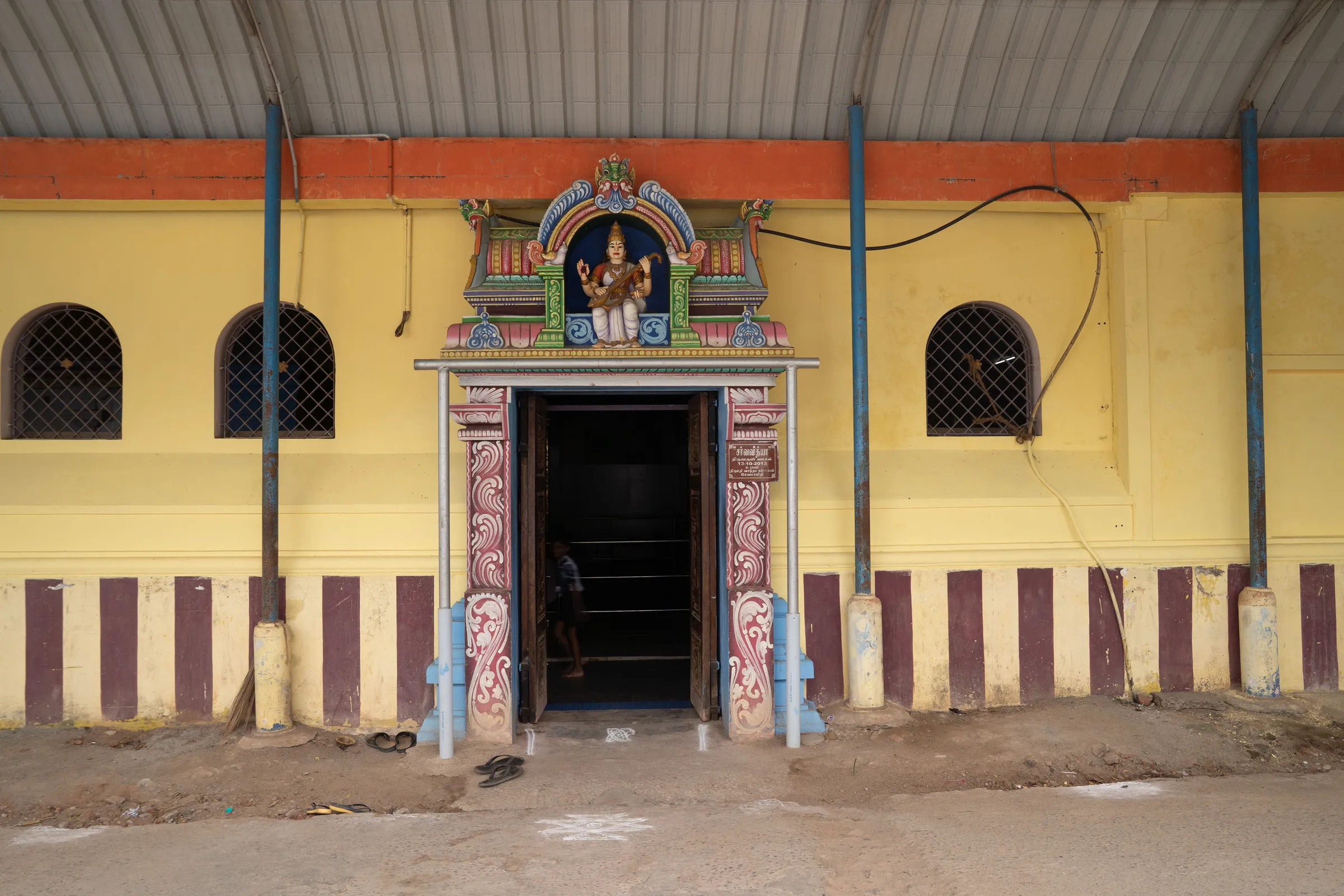
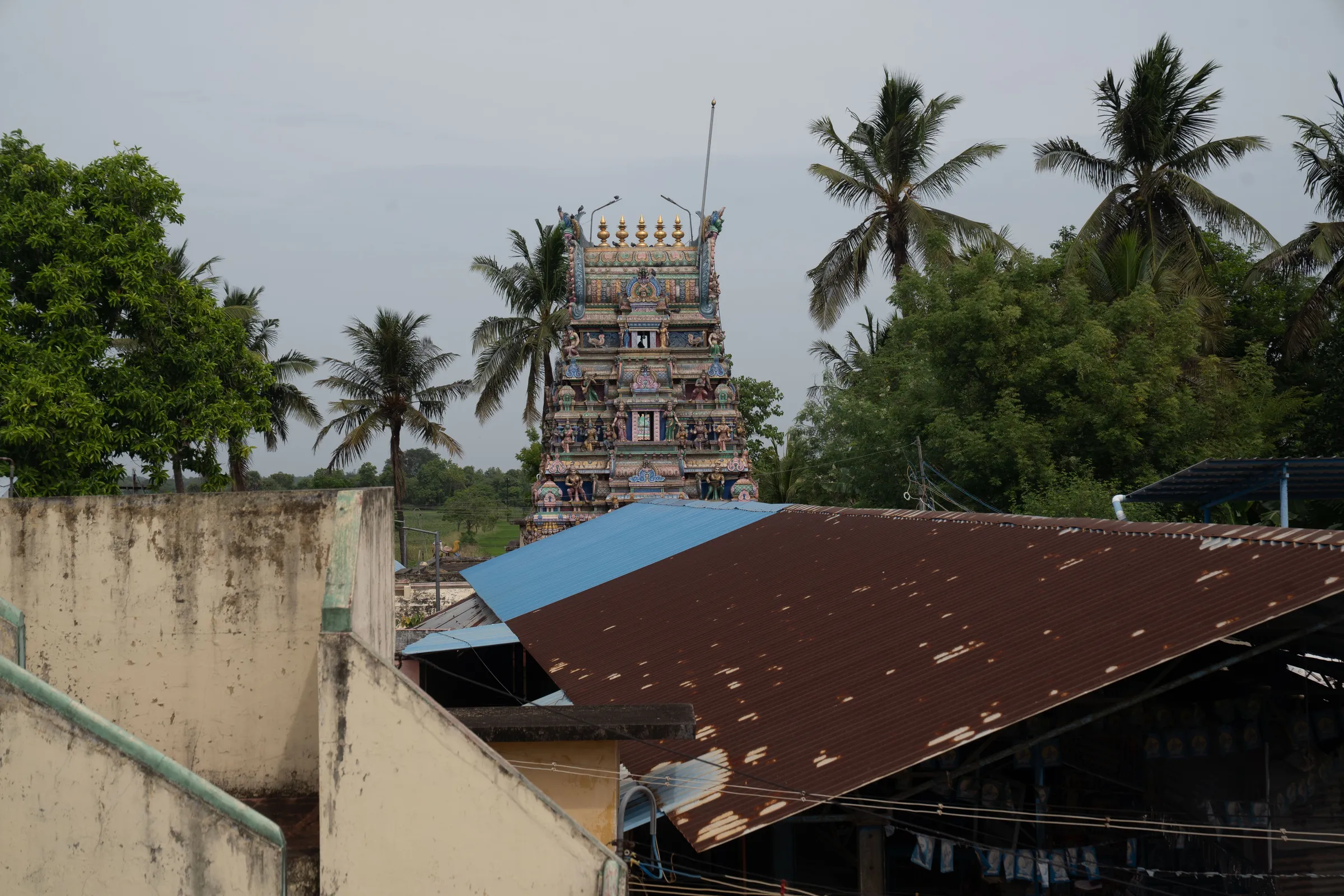
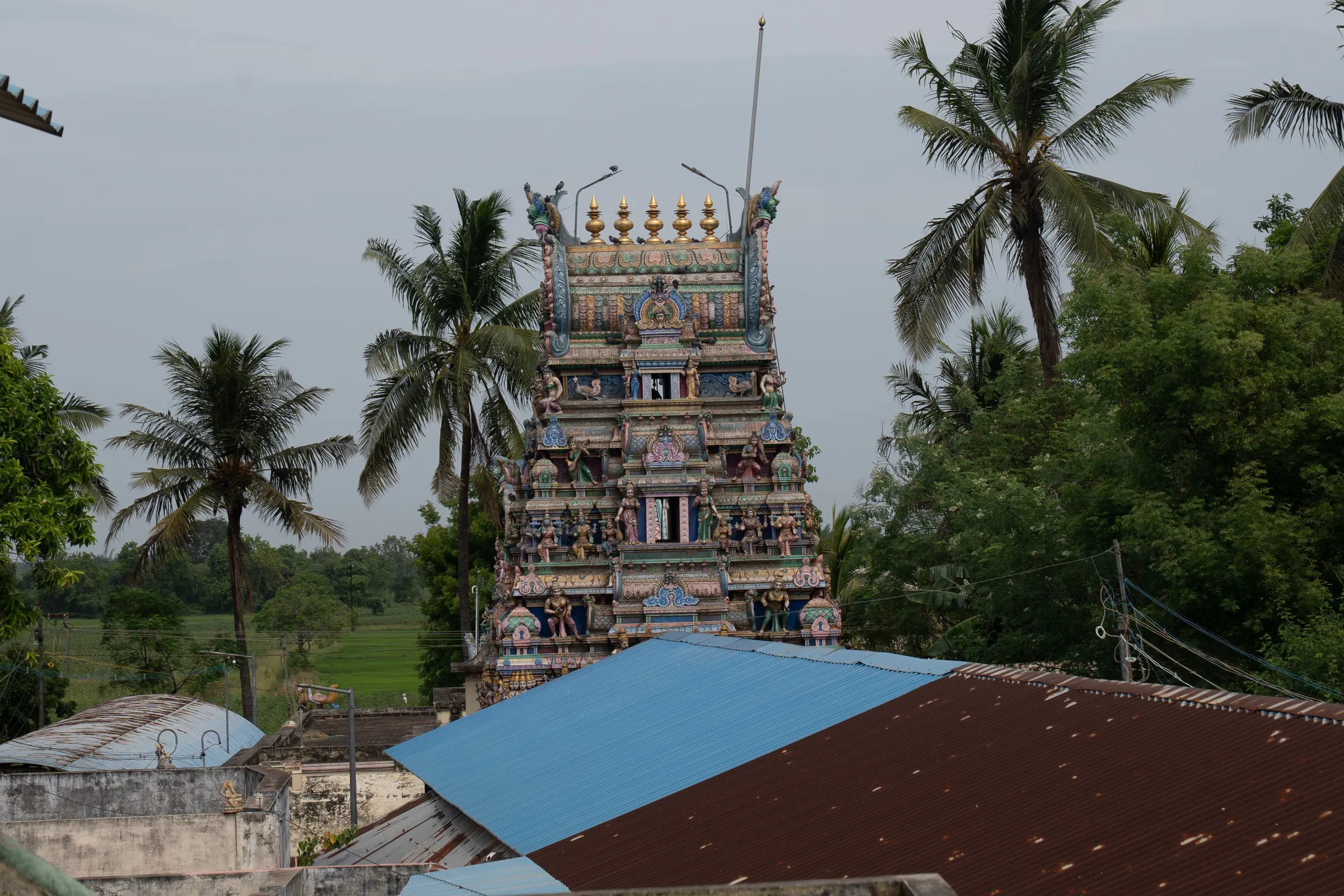
Standalone temples to Sarasvatī are rare, since tradition holds that she lives in learning and books rather than in images. The temple at Koothanur, on the banks of the Arasalar near Tiruvarur, is one such uncommon shrine.
A striking feature of the Koothanur temple is its gopuram, which is rather small but exceedingly beautiful, unlike the great gopurams kings often raised to signify their own majesty. Originally there was no roof before the shrine; in recent times a tin roof has been put up to shelter devotees. Around the main shrine of Sarasvatī are shrines for Śiva, Muruga and Vinayaka, the last considered Swayambhu, self manifested. The idol of Sarasvatī is chiselled in a sitting posture, one leg folded in a yogāsana pose, and by tradition clad in white.
03
Mythological
as transmitted
Koothanur is also called Dakshina Triveni Sangam, for the confluence of the Ganga, Yamuna and Sarasvati is held to occur here at the shrine. Legend says the place is named after the poet Ottakoothar, who was blessed by the goddess here and wrote great poetry. It is also said that Raja Raja Chōḷa II bestowed a village upon Koothar, which became Koothan Oor and in time Koothanur. Ottakoothar earned his name because he could reattach the severed heads of soldiers to their bodies through his songs, otta meaning to attach.
This is an open, reviewed record. If you have spotted an error or have
something to add — a correction, a date, a source, a name in another script —
propose it. Every change is reviewed before it joins the record.
You are suggesting an edit. Click any highlighted paragraph to change it.
“Suggest an edit” makes this entry editable right here — change the text, tell us how to reach you, and send it. No account needed. “Share feedback” opens a short form. Both go through review before anything is published.